
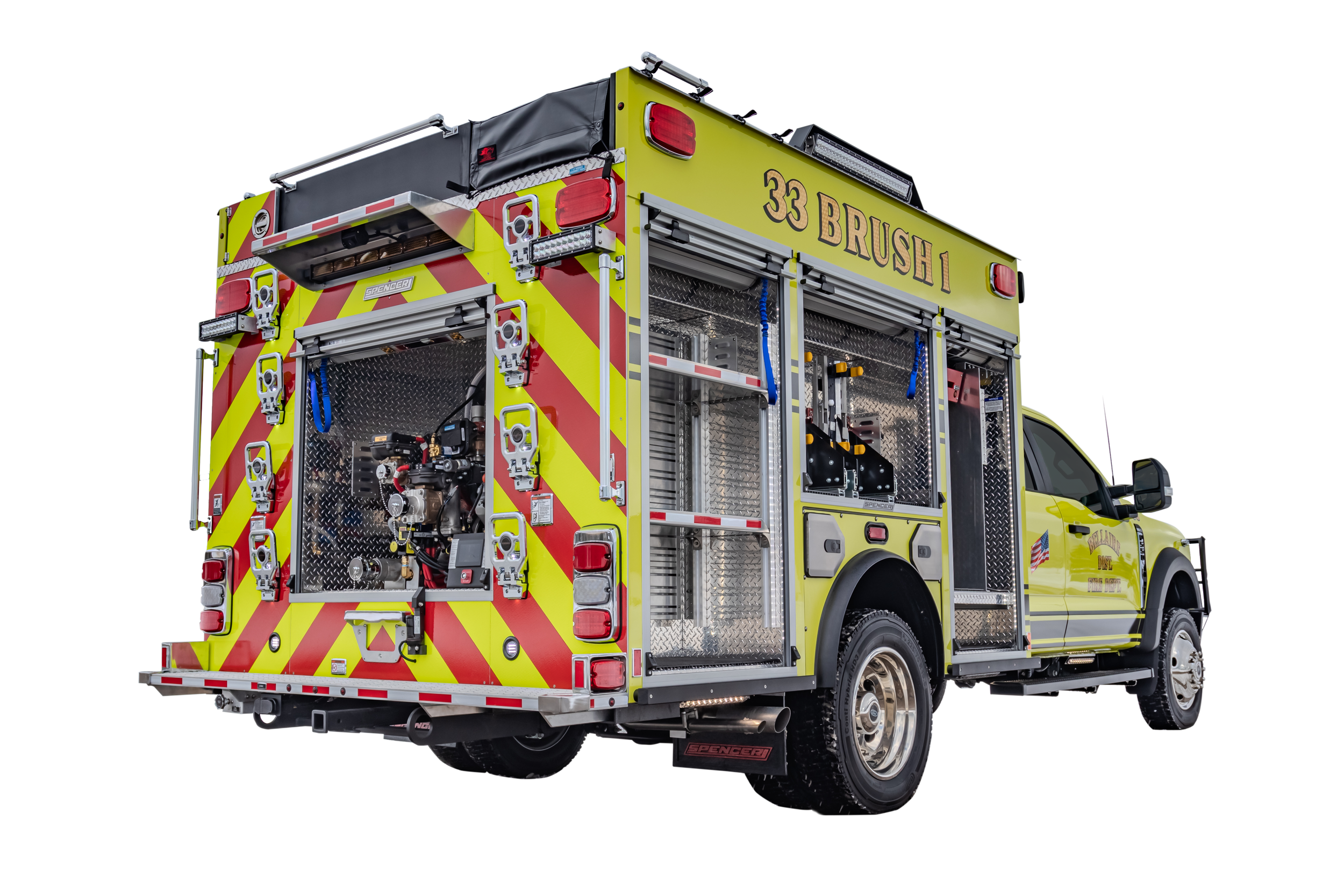
Initial Attack & Wet Rescues
Built for fast response, maneuverability, and operational flexibility, Spencer Initial Attack and Wet Rescue apparatus are available on several chassis platforms and configured around your department’s response environment and deployment needs.
Departments can choose from multiple pump options, preconnect layouts, hosebed configurations, and compartment styles including transverse, full-height/full-depth, and traditional split-level compartmentation.
No standard layouts. Just what works.
How This Shows Up in the Field:
Compact and maneuverable apparatus configurations → improved access in tight or challenging response areas
Custom preconnect and hosebed layouts → faster deployment based on department operations
Multiple pump configurations → suppression capability tailored to response needs
Transverse, full-height/full-depth, and split-level compartments → storage organized around equipment access and operational efficiency
Flexible chassis options → apparatus built around staffing, terrain, and response environment
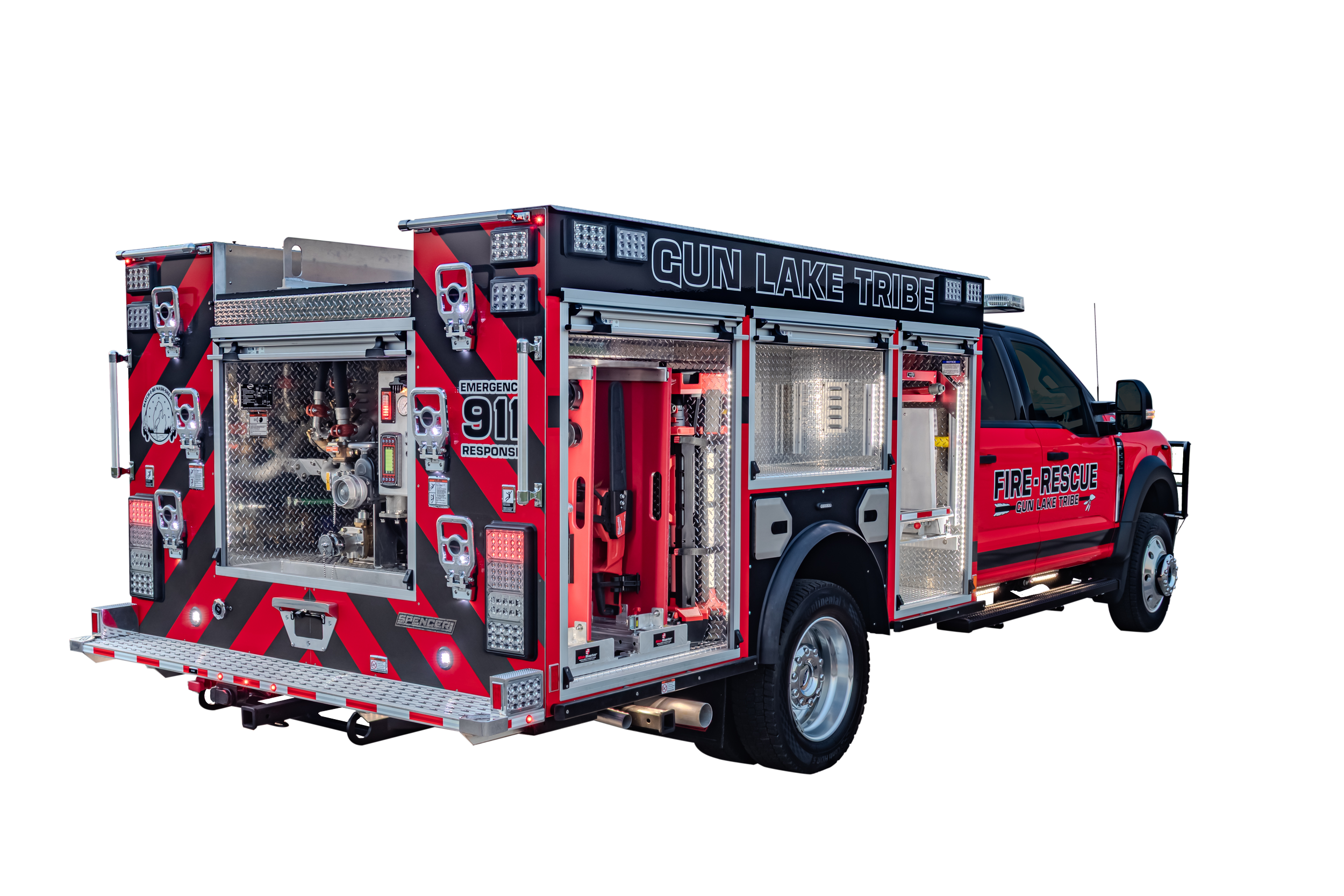
Wet rescue body configuration → supports suppression, rescue, and scene support operations
Full-height and transverse compartment layouts → increased storage accessibility and organization
Custom hosebed and equipment arrangements → built around department deployment preferences
Multi-role operational setup → designed for varied response environments and call types
Compact initial attack configuration → fast response and improved maneuverability
Elevated and accessible equipment layouts → designed for rapid deployment operations
Multi-compartment storage systems → organized around suppression and rescue equipment
Built for rural, off-road, and quick-response environments
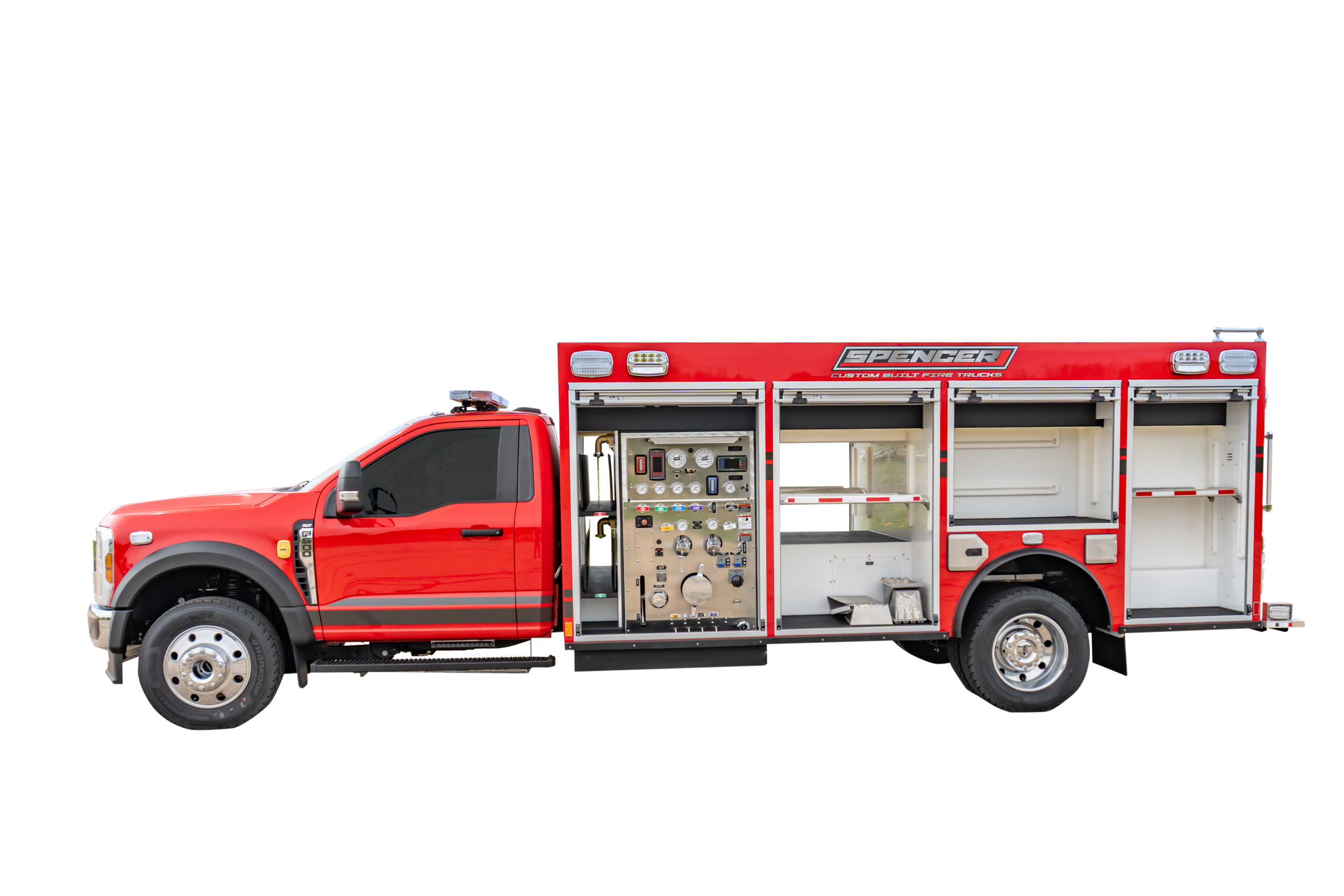
Compact chassis configuration → maneuverability in tight or difficult response areas
Side pump and compartment layout → efficient operational access
Simplified apparatus footprint → suppression capability without unnecessary bulk
Configured around staffing, terrain, and response environment